


About BEAM
Board of Directors
Keith McMillen composer, inventor, entrepreneur, is BEAM’s founder and director. Keith founded Zeta Music in 1979 and managed to reinvent the violin. Zeta is the world’s leading purveyor of modern violins, cellos and basses. Keith has started and sold multiple audio companies and has spent 25 years developing MACIAS - an integrated composition performance system. His invention, vision and money are the root cause of BEAM
Jaron Lanier is best known for his pioneering work in the field he named “Virtual Reality”. In the early 1980s he founded VPL Research, the first company to sell VR products. He co-developed the first implementations of virtual reality in surgical simulation, vehicle interior prototyping and virtual sets for television production. He has the world’s largest private collection of musical instruments and is a noted composer, musician, author and artist.
Max Mathews started it all. Working at Bell Labs in 1962 he taught the first computers to sing (memorialized by HAL singing “Daisy” in 2001 a Space Odyssey) using his program Music V. He is currently Professor of Music Research at Stanford University and continues to pioneer in human machine interfaces and new musical instruments.
John Katovich was General Counsel of the Pacific Stock Exchange from 1980 until 1995 when he became a founding member of ePit, one of the first internet based trading companies. He has participated in multiple financial startups and represents the monetary and legal interests of BEAM.
Barry Threw is a media technology consultant who develops tools that enable digital media artwork. He focuses on work that is immersive and interactive, for both installation and performance. He is also an electronic sound artist, who enjoys soundscapes that suspend time and suggest space.
BIOS
 Keith
McMillen has been working his entire adult life on one single problem — how to play live interactive music in an ensemble using extended instruments moderated by computer intelligence. This goal has required him to create scores of new instruments, patented technologies and multiple successful companies in order to advance the technology sufficiently to reach his performance objectives.
Keith began his audio career in 1979, when he founded Zeta Music. The company's revolutionary electronic instrument designs created a new market in the music industry, and the brand “Zeta” is synonymous with the modern violin. Later, as Vice President of R&D at Gibson Guitars, Keith worked with UC Berkeley’s CNMAT and created a new technology group focusing on audio networking, synthesizers and string instruments. As Director of Engineering at Harman Kardon, he formed an innovative new software product division dealing with audio processing and distributed networks. Keith founded Octiv in 1999 to solve major issues with live audio and led the company as both technologist and business guru raising over $20M from VCs such as 3i and Intel Capital. In April of 2005, Keith successfully sold Octiv to Plantronics (NYSE:PLT) and is personally funding the current operations of the BEAM Foundation. Keith received his BS in Acoustics under James Beauchamp from the University of Illinois where he also trained in classical guitar and studied composition with Herbert Brun and Sal Martriano. Keith has spent 25 years developing MACIAS — an integrated composition performance system that is the foundation of TrioMetrik’s music. He now works full time at composing, creating and performing while pursuing his original goal of a next generation music he has termed NuRoque.
Keith
McMillen has been working his entire adult life on one single problem — how to play live interactive music in an ensemble using extended instruments moderated by computer intelligence. This goal has required him to create scores of new instruments, patented technologies and multiple successful companies in order to advance the technology sufficiently to reach his performance objectives.
Keith began his audio career in 1979, when he founded Zeta Music. The company's revolutionary electronic instrument designs created a new market in the music industry, and the brand “Zeta” is synonymous with the modern violin. Later, as Vice President of R&D at Gibson Guitars, Keith worked with UC Berkeley’s CNMAT and created a new technology group focusing on audio networking, synthesizers and string instruments. As Director of Engineering at Harman Kardon, he formed an innovative new software product division dealing with audio processing and distributed networks. Keith founded Octiv in 1999 to solve major issues with live audio and led the company as both technologist and business guru raising over $20M from VCs such as 3i and Intel Capital. In April of 2005, Keith successfully sold Octiv to Plantronics (NYSE:PLT) and is personally funding the current operations of the BEAM Foundation. Keith received his BS in Acoustics under James Beauchamp from the University of Illinois where he also trained in classical guitar and studied composition with Herbert Brun and Sal Martriano. Keith has spent 25 years developing MACIAS — an integrated composition performance system that is the foundation of TrioMetrik’s music. He now works full time at composing, creating and performing while pursuing his original goal of a next generation music he has termed NuRoque.
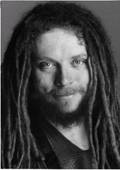 Jaron
Lanier is probably best known for his work in Virtual Reality.
He coined the term ‘Virtual Reality’ and in the early
1980s founded VPL Research, the first company to sell VR products.
While at VPL, he co-developed the first implementations of virtual
reality applications in surgical simulation, vehicle interior prototyping,
virtual sets for television production, and assorted other areas.
He led the team that developed the first widely used software platform
architecture for immersive virtual reality applications. As
a musician, Lanier has been active in the world of new "classical" music
since the late seventies. He is a pianist and a specialist in unusual
musical instruments, especially the wind and string instruments of
Asia. He maintains one of the largest and most varied collections
of actively played instruments in the world. Lanier has performed
with artists as diverse as Philip Glass, Ornette Coleman, George
Clinton, Vernon Reid, Terry Riley, Duncan Sheik, Pauline Oliveros,
and Stanley Jordan. Current recording projects include his "acoustic
techno" duet with Sean Lennon and an album of duets with flautist
Robert Dick.
Jaron
Lanier is probably best known for his work in Virtual Reality.
He coined the term ‘Virtual Reality’ and in the early
1980s founded VPL Research, the first company to sell VR products.
While at VPL, he co-developed the first implementations of virtual
reality applications in surgical simulation, vehicle interior prototyping,
virtual sets for television production, and assorted other areas.
He led the team that developed the first widely used software platform
architecture for immersive virtual reality applications. As
a musician, Lanier has been active in the world of new "classical" music
since the late seventies. He is a pianist and a specialist in unusual
musical instruments, especially the wind and string instruments of
Asia. He maintains one of the largest and most varied collections
of actively played instruments in the world. Lanier has performed
with artists as diverse as Philip Glass, Ornette Coleman, George
Clinton, Vernon Reid, Terry Riley, Duncan Sheik, Pauline Oliveros,
and Stanley Jordan. Current recording projects include his "acoustic
techno" duet with Sean Lennon and an album of duets with flautist
Robert Dick.
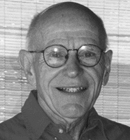 Max
V. Mathews In Memoriam directed the Acoustical and Behavioral Research
Center at Bell Laboratories from 1962 to 1985. This laboratory carried
out research in speech communication, visual communication, human
memory and learning, programmed instruction, analysis of subjective
opinions, physical acoustics, and industrial robotics. Mr. Mathews'
personal research is concerned with sound and music synthesis with
digital computers and with the application of computers to areas
in which man-machine interactions are critical. He developed a program
(Music V) for the direct digital synthesis of sounds and a program
(Groove) for the computer control of a sound synthesizer. Music V
and its successors are now widely used in the United States and Europe.
His past research included development of computer methods for speech
processing, studies of human speech production, studies of auditory
masking, and the invention of techniques for computer drawing of
typography. He is currently investigating the effect of resonances
on sound quality. He was Scientific Advisor to the Institut de Recherche
et Coordination Acoustique/Musique (IRCAM), Paris, and is currently
Professor of Music (Research) at Stanford University. He holds a
Silver Medal in Musical Acoustics from the Acoustical Society of
America, and the Chevalier dan l'order des Arts et Lettres, Republique
Francaise. Max plays violin.
Max
V. Mathews In Memoriam directed the Acoustical and Behavioral Research
Center at Bell Laboratories from 1962 to 1985. This laboratory carried
out research in speech communication, visual communication, human
memory and learning, programmed instruction, analysis of subjective
opinions, physical acoustics, and industrial robotics. Mr. Mathews'
personal research is concerned with sound and music synthesis with
digital computers and with the application of computers to areas
in which man-machine interactions are critical. He developed a program
(Music V) for the direct digital synthesis of sounds and a program
(Groove) for the computer control of a sound synthesizer. Music V
and its successors are now widely used in the United States and Europe.
His past research included development of computer methods for speech
processing, studies of human speech production, studies of auditory
masking, and the invention of techniques for computer drawing of
typography. He is currently investigating the effect of resonances
on sound quality. He was Scientific Advisor to the Institut de Recherche
et Coordination Acoustique/Musique (IRCAM), Paris, and is currently
Professor of Music (Research) at Stanford University. He holds a
Silver Medal in Musical Acoustics from the Acoustical Society of
America, and the Chevalier dan l'order des Arts et Lettres, Republique
Francaise. Max plays violin.
 John
Katovich has been in-house and external counsel to companies
for the last 20 years. He became General Counsel for the Pacific
Exchange in the mid '80s after several years as both a trader and
regulator. John was also the in-house General Counsel for two software-trading
companies, OptiMark Technologies and ePIT Systems. John currently
provides general, licensing and regulatory counsel to several technology,
software and trading companies in the Bay Area. He graduated from
the University of Illinois in 1976, and Southern Illinois Law School
in 1979. He is licensed to practice in both California and Illinois.
He plays Saxophone.
John
Katovich has been in-house and external counsel to companies
for the last 20 years. He became General Counsel for the Pacific
Exchange in the mid '80s after several years as both a trader and
regulator. John was also the in-house General Counsel for two software-trading
companies, OptiMark Technologies and ePIT Systems. John currently
provides general, licensing and regulatory counsel to several technology,
software and trading companies in the Bay Area. He graduated from
the University of Illinois in 1976, and Southern Illinois Law School
in 1979. He is licensed to practice in both California and Illinois.
He plays Saxophone.
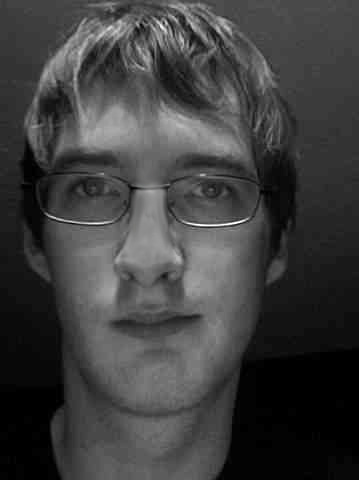 Barry Threw is an electronic musician and programmer specializing in interactive and experimental media. His music attempts understand our relationship to technology and create beauty and space within its context. When he is not striving to perfect the systems at the BEAM Foundation, he works with Recombinant Media Labs and Immersive Media Research to develop tools and methodologies for surround media, and is an engineer and sound designer living in San Francisco, CA.
